
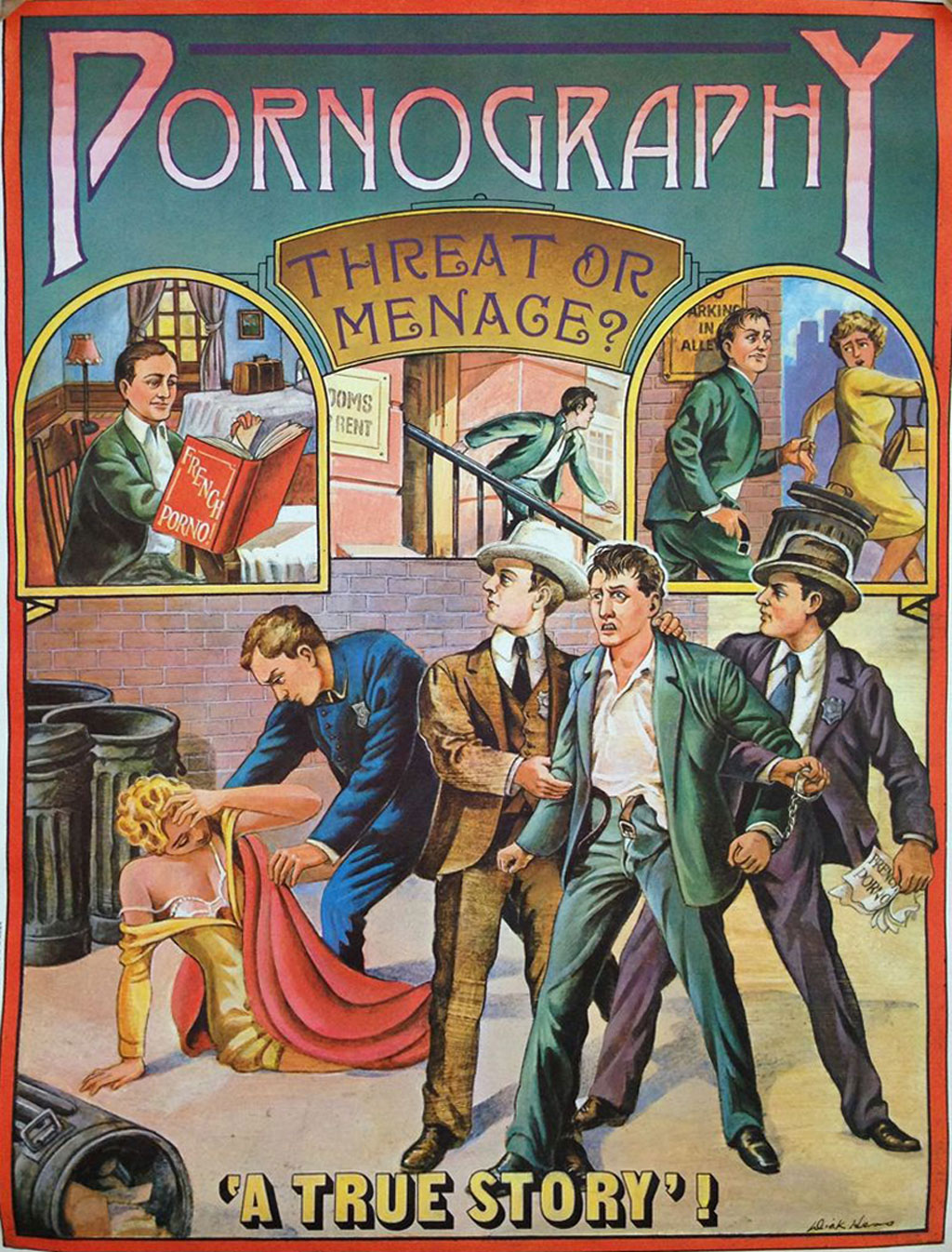
AI is being used to generate explicit images of real people, celebrities, and minors. Nudity! Bikinis! Sex, sex, so much sex!
The use of technology to create pornography is, of course, intolerable and must be stopped.
For weeks, Elon Musk’s AI chatbot Grok has been undressing women and minors. California’s Attorney General launched an investigation into the “shocking, disgusting, vile” images. Indonesia and Malaysia blocked Grok entirely. Lawmakers are hyperventilating all over the world.
The rise of sexual deepfakes has led to US federal laws (the TAKE IT DOWN Act May 2025, DEFIANCE Act January 2026), and new investigations this month in Canada and France. Taylor Swift, Scarlett Johansson, and Italian Prime Minister Giorgia Melonia have all been involved in high-profile controversies over sexually explicit deepfakes.
But that’s not all.
AI is being used to generate online adult content. A few years ago a Europol report suggested that up to 90% of adult content will be AI-generated by 2026, posing a threat to the livelihoods of OnlyFans streamers and other performers. (Don’t underestimate that - there are over five million creators worldwide generating eight billion dollars in revenue.) In 2025, the Internet Watch Foundation (IWF) reported a 26,000% increase in AI-generated explicit videos.
The obvious conclusion is that the use of technology to create pornography is intolerable and must be stopped.
Wait, there’s more.
AI avatars are being used for companionship, therapy, and artificial intimacy. A startling percentage of people experimenting with AI chatbots escalate to extreme virtual escapism and virtual sex, potentially altering the nature of real-world relationships.
Isn’t it clear that the use of technology to create pornography is intolerable and must be stopped?
There’s something familiar about the fuss over AI generated porn.
Ah, it comes to me now. The adult industry has always been a driving force behind new technology.
The porn industry has repeatedly bankrolled research and development years before new technology reaches the mainstream. Erotica has provided the incentive, the funding, and the technical proving ground for every leap in mass communication for 750 years.
AI porn? Just the latest battleground in the never-ending war.
Let’s take a quick trip back in time.
Erotic innovation through the ages

Erotic images have been produced since the earliest human beings painted on the walls of caves and made crude figurines. The Venus of Willendorf in the picture above is estimated to have been made 30,000 years ago.
But let’s focus on the production of material for the “adult industry.” I’ll use that as the euphemism for images of nekkid people. That’s the common thread through history, it’s always nekkid people.
The adult industry is built on high demand, high margins, and a requirement for privacy. It is a proving ground where emerging technologies are tested, scaled, and perfected before transitioning into the mainstream.
It has always been so.
Let’s go back 750 years.
The printing press
For the first 75 years or so after Gutenberg’s invention of the printing press in the mid-15th century, books were out of reach for anyone but the wealthy.
By the early 1500s, printers were beginning to shift to local languages and single sheets and inexpensive almanacs were becoming more widespread.
Two events caused the printing press to cross over to the masses.
The first was religious. Between 1517 and 1520, Martin Luther’s works sold over 300,000 copies - the first time in history a common person could buy a printed work for a negligible price.
The second was porn. In 1524 I Modi (The Positions) became the first pornographic bestseller. It used the new technology of engraving and printing to move erotic art from Roman elite private villas to the general public. High-volume erotic publishing proved the economic viability of publishing for the masses.
The adult industry provided the incentive to refine engraving techniques and establish distribution networks that were essential for the later success of more respectable publications.
Photography
When the daguerreotype was first introduced in 1839, early exposure times ranged from three to fifteen minutes - impractical for almost any human subject. The demand for erotic images was so potent that early photographers immediately began experimenting with sensitization processes and lens improvements to reduce exposure times.
By the 1840s, photographic studios in Paris—the global center of the trade—were using "smut dealing" to subsidize their legitimate artistic and scientific work. As exposure times dropped below one minute, the volume of erotic photographs increased exponentially. Police records from Paris indicate that while only 60 photographs were seized in 1850, that number had ballooned to over 130,000 by 1875.
This massive market growth funded the transition from the unique, expensive daguerreotype to the mass-produced paper photograph.
The stereoscope

If you’re old enough, you remember the View-Master from the 1960s, a kids’ toy for viewing 3D images.
The stereoscope was quite a phenomenon when it was developed in 1849. People excitedly viewed 3D images of Egyptian pyramids and European landscapes. But erotica quickly became the primary industry driver for the technology. And it’s worth noting that the stereoscope is a direct technical precursor to the adult industry’s current role in adoption of VR headsets.
Movies
The Jazz Singer (1927) is commonly identified as the watershed moment for movies with spoken dialog. Over in France, producers were adding sound to erotic shorts as early as 1896. The adult industry was using sound and dialog in stag productions by the late 1920s, alongside the major Hollywood studios.
The VCR format war: VHS versus Betamax
The porn industry determined the winner of the videocassette format wars. Betamax tapes were limited to one hour and Sony had a restrictive policy against adult content. The VHS consortium had an open format and the tapes could hold an entire adult feature on a single tape. The adult rental market was a significant portion of early VCR sales. By 1978 Debbie Does Dallas had become the best-selling VHS tape in the United States. Betamax’s market share plummeted as the adult rental market shifted entirely to VHS.
Technology also assisted in the privacy factor. Users could purchase X-rated videos via mail or at a store in a "plain brown wrapper" and view them in the privacy of their own homes. It helped create a massive revenue stream that bankrolled the proliferation of video rental stores and the mass production of camcorders.
Bandwidth
In the last forty years, the adult industry has been a primary driver of the software and architectural standards of the internet.
The demand for erotic photos drove adoption of VGA monitors and higher capacity hard drives in the 1990s. Adult content dominated Usenet newsgroups in the mid-1990s, creating an insatiable need for bandwidth. Penthouse magazine distributed 2400 baud modems - the fastest available at the time - to its readers. The adult industry provided the initial user base that justified investments in local ISP infrastructure for faster connections, before mainstream corporate interest had fully developed.
Image compression
Image compression standards like JPG were profoundly influenced by the adult industry’s demand for high fidelity images at low file sizes. The adult industry was the first to implement optimized JPG delivery on websites to reduce load time. This early focus on traffic optimization and load performance laid the groundwork for the modern user experience on the web.
Video streaming and CDNs
The adult industry pioneered video streaming years before YouTube or Netflix emerged. Porn firms developed internet video streaming as early as 1994, years before news networks like CNN were delivering video clips.
As video quality improved, the adult industry provided the sheer volume of traffic and the massive financial rewards that led to the creation of Content Delivery Networks (CDNs), a crucial underpinning of today’s internet. By 2010 streaming video had officially become the largest source of internet traffic, catalyzed by adult sites.
E-commerce and financial innovation
Because of the shame factor, the adult industry needed to solve the problem of online payment long before mainstream retailers.
In the mid-1990s, Electronic Card Systems (ECS) revolutionized credit card payments for "disreputable" websites. By 1999, internet users were spending $1.3 billion on online pornography—representing 8% of all internet commerce and more than the combined revenue of online book and travel sales at the time. ECS and its successors pioneered the use of recurring billing and discreet billing statements, features that are now standard for all subscription-based services like Spotify or Netflix.
Traditional banks like Chase and Wells Fargo and payment networks Visa and Mastercard have always been unhappy about handling payments for porn. The industry developed specialized payment processors and pioneered high level encryption to protect customer data and address verification services to prevent the use of stolen cards.
Today the porn industry is pioneering the use of blockchain and cryptocurrency for payments.
Webcams, VR, and teledildonics
In the last decade the adult industry is moving into interactive and immersive experiences. Live webcams are pioneering real-time interaction with sex performers, tipping models (now being adopted by mainstream platforms like Twitch), and low-latency high-definition feeds.
VR pornography is a growing business with revenue in 2026 estimated at $19 billion. VR porn is being integrated with AI-driven characters that respond to user choices for interactive storytelling.
Networked electronic sex toys - “teledildonics” - were largely frozen until a patent expired in 2018. Now bluetooth and app-controlled devices are pouring on the market. The tech is being integrated with VR and camera sites, allowing physical toys to vibrate in response to financial tips or on-screen actions.
The Huggies pregnancy belt used vibrations to allow fathers to feel a baby’s kicks in the womb. It was an early but direct descendant from adult industry haptics.
Generative AI and deepfakes
Deepfakes - swapping faces in videos - were first seen in the adult space before they became a global concern for disinformation and digital identity.
Today the adult industry is plunging ahead with the use of generative AI to create avatars and animate scenes in response to user prompts. AI-driven narrative generation is used to create storylines that respond to user input in real-time.
Every tech advance for 750 years has been accompanied by moral outrage and new laws and cries of woe about the decline of civilization. So it has ever been, so it will always be. Today it is AI generated pictures of nekkid people driving society forward and preparing the masses for the tech wonders to come.
One battle after another.