
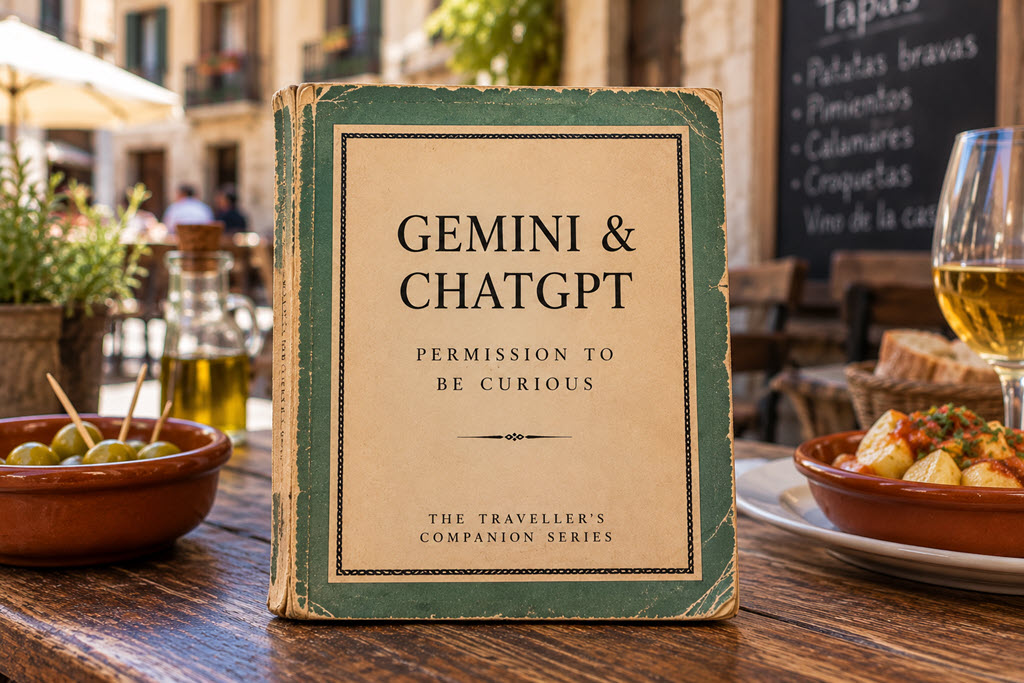
Two weeks ago I was at Restaurante Oliver in Granada’s Old Town in Spain because I’m living a charmed life. The menu was in Spanish but my high school classes were serving me well and I could recognize key words like “tortilla” and “frito bandito.” Then I stopped pretending and picked up the English menu but at least I tried.
The red wine selection was a puzzle, though. It was just like getting a wine list at California restaurants with no familiar labels, but at least at home there are recognizable varieties and I can confidently point at a Cabernet Sauvignon as if I have a clue.
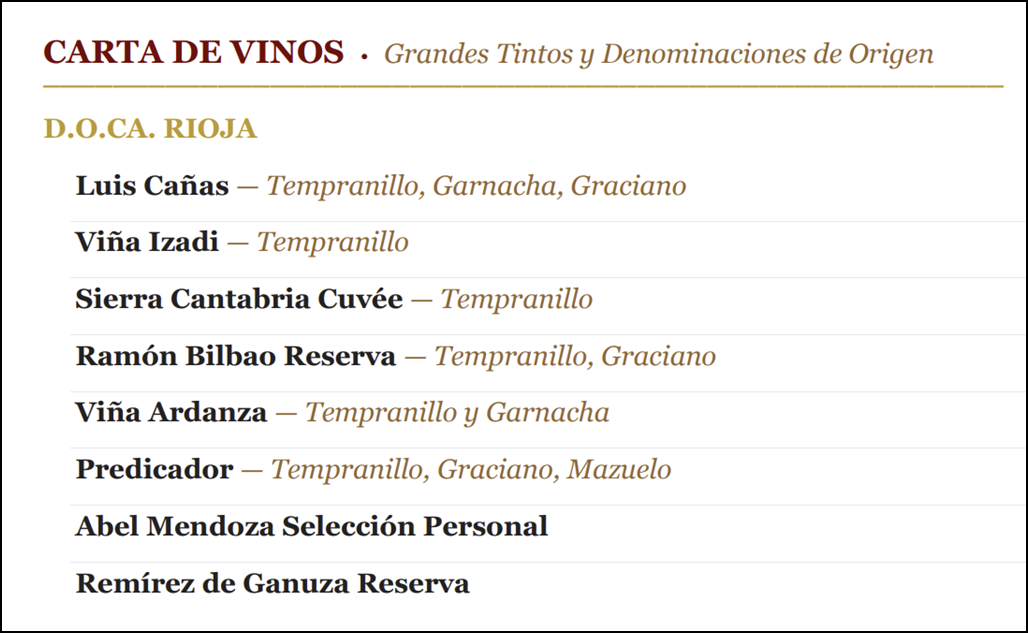
But in Spain - Tempranillo, Garnacha, and Graciano? Is that a blend? Is it a glass of wine served with olives and sincere thanks? Beats me.
We have a new option in 2026. It transformed our trip to Spain.
I took out my phone and used Google Lens to take a picture of the wine selection. Then I tapped the microphone icon and said, “What would be the best wine on this list if I prefer California Cabernet Sauvignon with a smooth finish?”
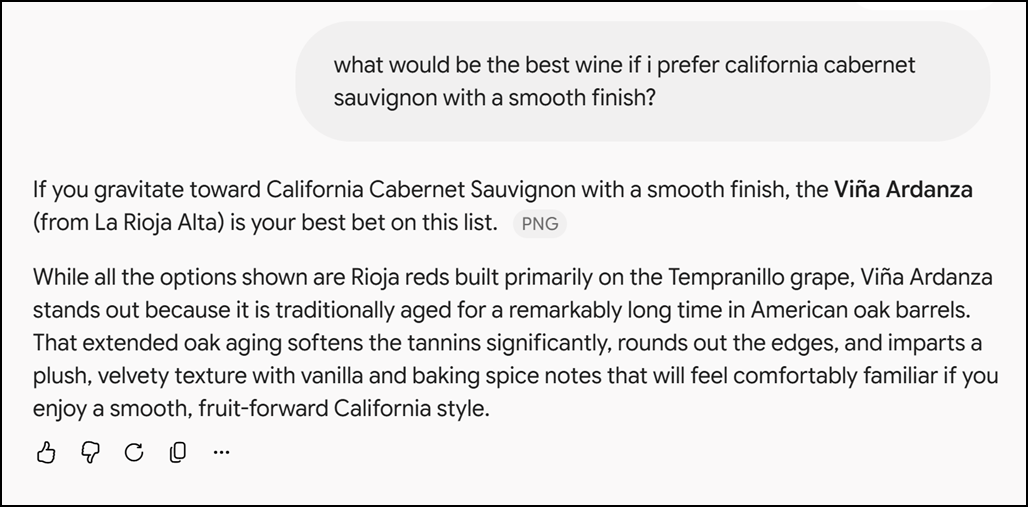
In two seconds Gemini suggested the Vina Ardanza. It was so quick that no one at the table noticed I had gotten advice. It was a great glass of wine.
I don’t know if you’ve noticed but some people don’t like AI. Something about the possible destruction of humanity or the likelihood of global economic collapse rubs people the wrong way.
There are two different conversations about AI. One is what AI may do to society. The other is what AI can do for you. Today’s story is about what it can do for you, today, right now. I want you to start using AI in your everyday life – especially Gemini and Google Lens - despite all that deep and well-deserved hatred for the AI industry.
This is possibly the most helpful article I’ve ever written. Pay attention, kids, this is a big one.
The world comes with an explainer now
Every day we run into little mysteries and simply let them go. We might remember to look them up later, but usually we don’t.
AI has removed all the friction. You don’t have to know how to look something up. It doesn’t take any time. Just ask the question. One way to think about it is that having AI in your pocket gives you permission to be curious.
Suddenly, unexpectedly, we live in a new world where any information is immediately available for the asking. It might be recipes, weather, flight status, movie recommendations, travel planning, party ideas, what to write in a birthday card, ideas for hobbies you might enjoy and how to get started, writing an email, meal planning, how to fix a plumbing problem, outlining memoirs, comparing car models, analyzing an insurance policy to see if it covers a loss, asking what the reviews of a book say, or getting a summary of something in the news at whatever level makes sense to you.
You can ask about almost anything, at any level of detail, in whatever words occur to you. You can ask stupid questions! Whatever you ask, you’ll receive an immediate explanation tailored to what you actually want to know.
Traveling with AI
We spent three weeks in Spain and we used Gemini constantly. Suggest some restaurants by the Malaga waterfront that aren’t very expensive but aren’t touristy. Where can we find local ceramics. Suggest an itinerary for my first visit to the Prado and minimize Renaissance portraits and pictures of Jesus. Tell me about the tunnel our train just went through. How do we get from Madrid Airport Terminal 4 to Terminal 4S. What specialties at this restaurant do people like the most. Is it worth it to buy an advance ticket to the Alhambra. Suggest some options in Granada that are not well known by tourists. (That’s how we found ourselves in the most amazing Arab baths.) On and on, nonstop, literally dozens of times every day.
I didn’t have to do anything technical except remember that Gemini exists. And I want you to believe me when I say that this is not just for tech whiz kids! My wife resists new technology just like all of you normal people and she used Gemini as often as I did. These were three second impulses, not a gee whiz bit of nerd tech.

We began to understand the power of Google Lens, the app that lets you point your camera at something and ask a question. A couple of years ago it wasn’t clear what to do with that except to identify what kind of tree you were next to.
Now you can point at anything and ask anything. In a Malaga church I pointed my phone at a wood carving of a saint, one of 42 sculptures, and immediately learned that it was Saint Andrew and he wasn’t holding a pair of skis like it appeared but instead was holding the diagonal cross that he was martyred on.
In Madrid the statue across from our hotel was bristling with arrows. Google Lens told me it was Saint Sebastian, tied to a post by Emperor Diocletian and shot by archers, leaving him looking “as full of arrows as a hedgehog is of prickles.” Except he didn’t die, so Sebastian took the next opportunity to confront the Emperor again and was immediately dragged away and beaten to death with clubs and thrown into the Roman sewers.
Religious stories are weird.
But the point is that Google Lens became a tireless assistant to tell me useful things about whatever I was looking at, big or small. What is the domed building in the background. How do I turn on this dishwasher. Tell me about that brand of shoes. Who’s the celebrity in that photo on the wall. How much is that doggie in the window. Why are people standing in line at this tapas restaurant but not the one next door. (The answer was always TikTok and Instagram.) If you’ve picked up the habit of going to YouTube and trying to find badly recorded videos about how to do something, this is frequently a better alternative.
Getting started
Install Gemini on your phone. (Gemini is better for asking questions about the world. ChatGPT is better for chats and projects. Try them both!) A free account is sufficient for day-to-day use.
Google Lens is a free app that uses your camera to do searches using Gemini. It’s likely already on your phone but if you’re not sure where to start, install the “Google” app on an iPhone or the “Google Lens” app on an Android phone.
We trained ourselves to do Google searches by typing in a small number of words. AI is different. You don’t need keywords, expertise, or even a well-formed question. Tap the microphone and ask a question in the form in which it occurred to you. Your part can be as long and as detailed as you like.
You’ll get an answer which will probably start by telling you that you’re very handsome, then give you an answer that’s better than you expect.
Think of your interactions as a conversation. Always think about what you could learn from a followup question. Ask it to tell you about the other side. If you ask about a restaurant and Gemini tells you it’s great, then ask what complaints people have about the restaurant. Don’t assume that the first answer is the end of the story.
The apps on your phone have a couple of different icons to click - one for a question and answer, the other for a chat. If you’re not sure how to use the app, ask it for help. If the answer it gives you is too technical, ask it to give you simpler instructions. It’s a conversation.
You have an infinitely patient, very well-informed companion in your pocket. Force yourself to remember to use it until it becomes a habit.
Obligatory warnings
1) You’re not talking to a person. AI is computers. It’s math. You will not hurt its feelings. You will not be judged. If it tells you something positive, great, being praised is fun, but you’re being praised by math. You don’t have to say Please or Thank you but it won’t hurt if you do that because you’re a nice person.
And if you find yourself believing it understands you and you start to have feelings for it, don’t do that. It’s math.
2) Be careful with health questions! AI can be very helpful but it is absolutely not a substitute for advice from trained professionals. Doctors have our charts and their job is to interpret both what we tell them and what they know about us. Without that human professional in the room, we are not good at describing our own symptoms and treatments. AI only knows what we tell it and it can get things wrong if we give it incomplete information. It is particularly important to challenge AI health answers with followup questions, and consult professionals just like always before making decisions.
In the next article we’ll talk about why this might destroy the human capacity for insight and creativity. But not in this article! This is a happy article! Go forth and be curious!