
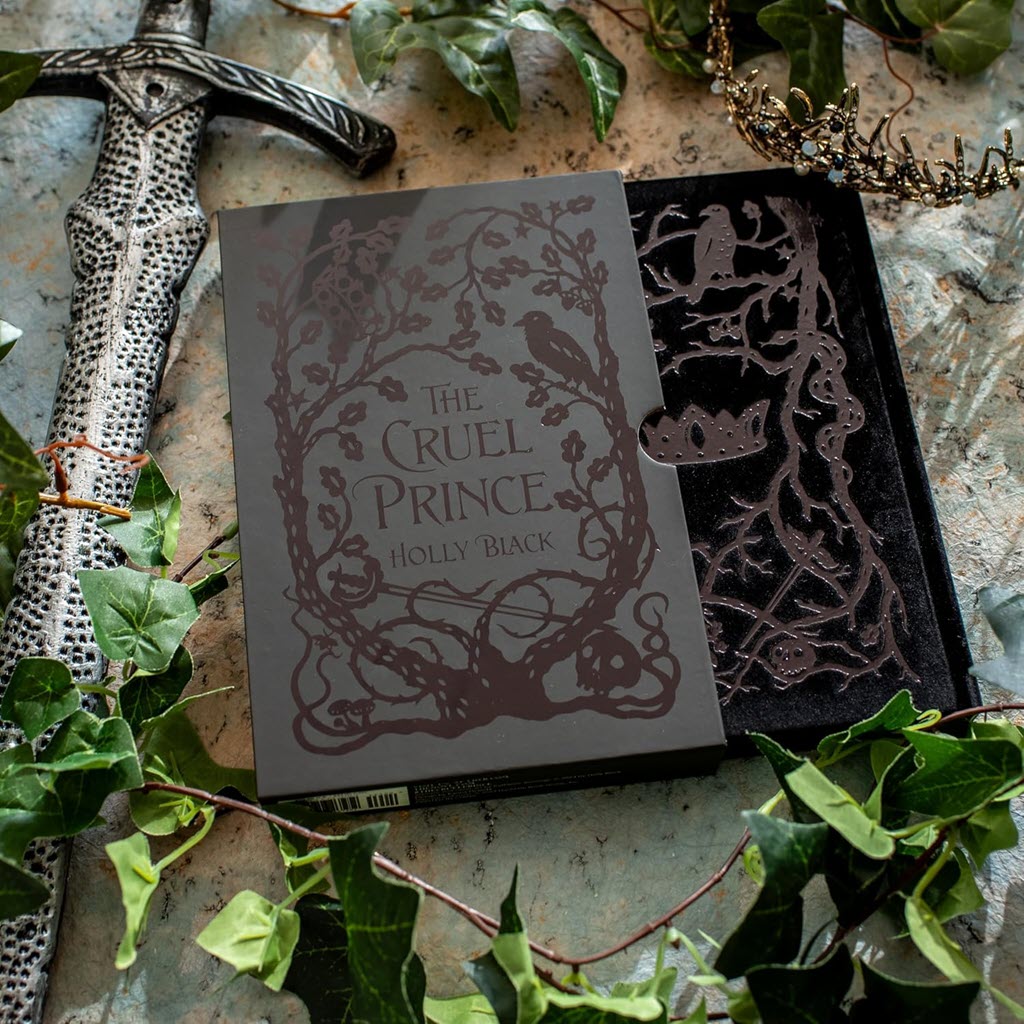
Holly Black’s The Cruel Prince was massively popular when it was published in 2018 - New York Times bestseller, millions of copies sold.
It became a sensation in the romantasy world of BookTok, the short videos that galvanized the publishing industry after 2020. So recently the publisher released a “collector’s edition” with a velvet cover, slipcase, sprayed page edges, ribbon bookmark, illustrated endpapers, and more.
It’s not expensive. It’s priced like any other hardcover book. But if you see it in a store or give it as a gift, it looks special.
In fact, if you look around the bookstore, you’ll spot a number of books with sprayed edges or ribbon bookmarks or signatures or special bindings or dustjackets.
It’s a trend. The publishing industry is prioritizing the physical look of books as much as the words inside. It’s a response to a changing world that is suffering from digital fatigue and looking for sensory experiences.
There’s a lot of that going around.
Perhaps you know someone who bought a turntable and is shopping for vinyl albums. There’s growing demand for instant film and traditional film photography. Hobbies like knitting, crochet, pottery, and woodworking have seen a massive resurgence. And the tabletop gaming industry has exploded as people seek face-to-face interaction as an antidote to the isolation of online gaming.
The 2010s were the era of digital saturation. Today we are still largely driven by our digital worlds but the backlash is very real as people seek sanctuary from the constant barrage of distractions.
I’m going to focus on book publishing but much of what I describe applies to those other niches as well.
For decades everything from art and jewelry to labubus and Stanley 40oz cups have been labeled as “collectors items” and “limited editions.” Sometimes it’s true! Books from mainstream publishers seldom become valuable, but rare and limited edition books are investments that might appreciate over time.
But our world is far weirder than that. The primary driver of the collectible trend today is the role that books play on TikTok and Instagram, where they are accessories and lifestyle identifiers. Imagine that you’re on a fleece blanket on the grass in the quad, glass of wine in one hand, a copy of The Song of Achilles open on your lap. When you post a picture captioned “Living my mythological fantasy,” perhaps you’ve achieved all you want with the book without the difficult bit where you actually read it.
BookTok started during the pandemic. It had a huge influence on the publishing industry. A flood of videos poured into TikTok of readers sobbing over heartbreaking scenes or throwing a book across the room in anger at a plot twist. Creators pitched books in lists based on their tropes and character types - “Books that are enemies to lovers,” “Grumpy vs sunshine.” Other videos featured fast-paced edits with stock footage to capture the vibe of a book - moody libraries, rainy windows, castles, cut, cut, cut, cut. People would film themselves dressed up as characters from a book.
Bookstagram (yes, that’s the shorthand name for something so widespread that it gets a shorthand name) focuses on making books into aesthetic props used in staged photography. Publishers quickly realized that their books needed Instagrammable features. Book covers were simplified to maximize visual impact on a phone screen. Special editions of popular titles - especially fantasy and romance - got sprayed edges (stencils or solid colors on the page blocks), ribbon bookmarks, custom foiling, and vibrant typography.
Mainstream publishers frequently launch books in multiple formats - standard, signed, and deluxe. There are special edition box sets of The Hunger Games and The Poppy War. Rebecca Yarros’ enormously popular Empyrean series became a viral sensation when limited first printings featured dragon-themed stenciled sprayed edges, metallic foil on the covers, and “Wing and Claw” branding.
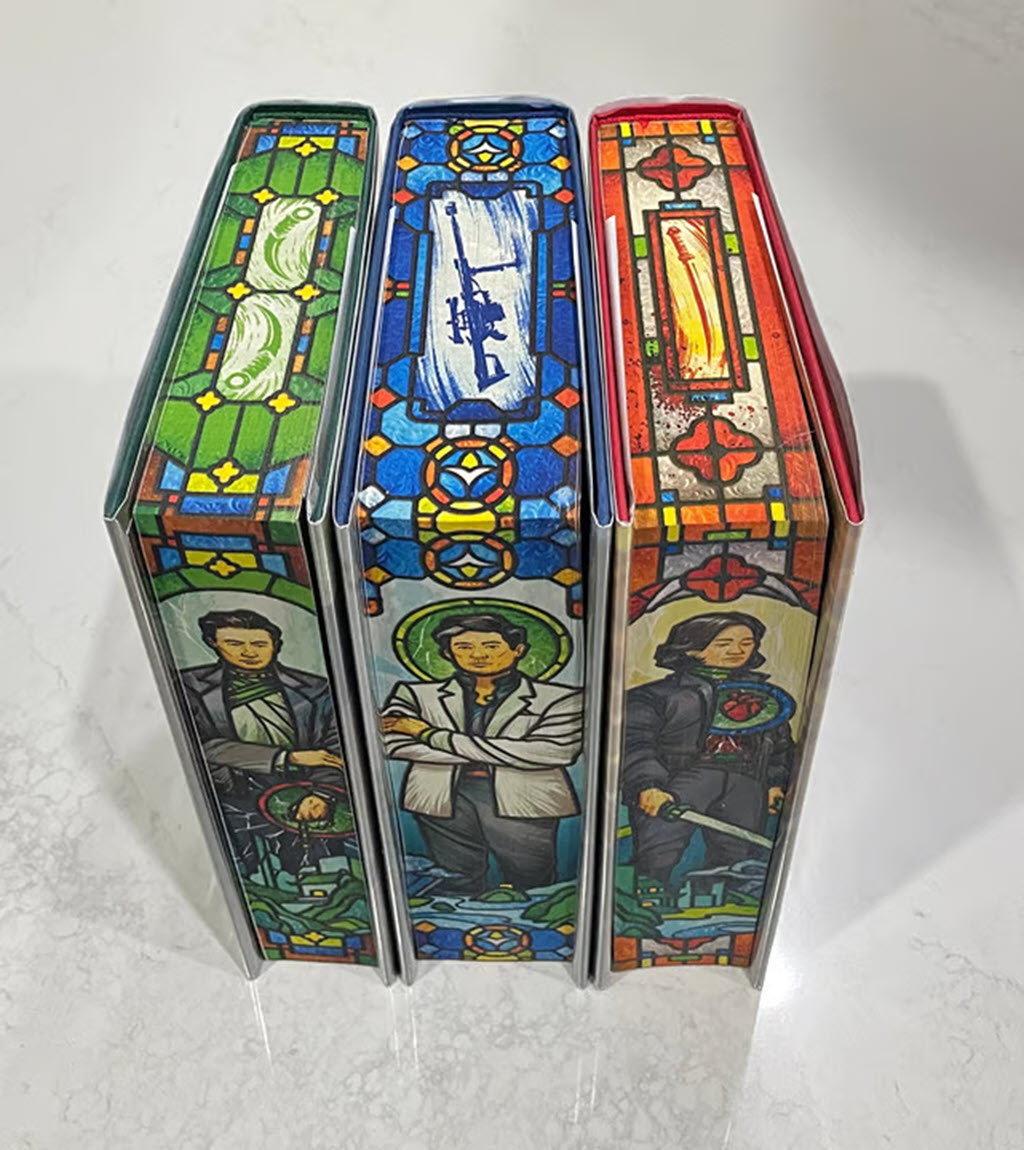
Fonda Lee’s Green Bone Saga was printed by a specialty publisher with unique dust jackets, interior art, a fold-out map, and the spectacular sprayed edges shown above. They look great in photos and videos and you can put them on the shelf facing in or out. They’re so attractive that you might almost overlook the words inside. (Forget the pretty art, don’t miss Jade City if you’re a fantasy fan - a silkpunk martial arts gangster political thriller with magic. Amazing world building.)
Booksellers have stepped into the game with Barnes & Noble “Exclusive Editions”. I’ve happily gotten signed limited editions of books by Cormac McCarthy, Haruki Murakami, John Le Carre, David Mitchell, and Ian McEwan from UK bookseller Waterstones.
Publishers are also licensing titles to subscription services that ship boxes of “exclusive” editions to subscribers. Stencil the edges of the books, create custom dust jackets, and voila, a guaranteed revenue stream - and since the books are shipped to all the subscribers at once, the publishers get a sales boost that might take that week’s book onto the bestseller list. The subscription boxes cater to niches - romance, fantasy, young adult. They’ve become so popular that many of them have waiting lists to become a subscriber, and the scarcity adds to demand: people see videos of the latest books from Illumicrate or FairyLoot or The Broken Binding (creators of the Fonda Lee books above) and it increases their desire and Fear Of Missing Out.
Gift books aren’t new. Fancy books were a status symbol in the Victorian era from 1820 to 1860 when new technology first allowed mass production of gilded bindings and silk or leather covers at middle class prices.
Today we’re seeking to escape from technology. Physical items - books, vinyl LPs, photos on paper - give us a way to push back against lives spent in digital, immaterial realms.
Just don’t forget to read the books and play the records. My beautiful limited edition books are treasures beyond price for me, but I try to remember that it’s the words that matter.